Indianapolis is having a moment and not in the loud, headline-grabbing way of coastal cities, but in a steady, strategic way that’s catching the attention of investors, developers, and everyday buyers alike.
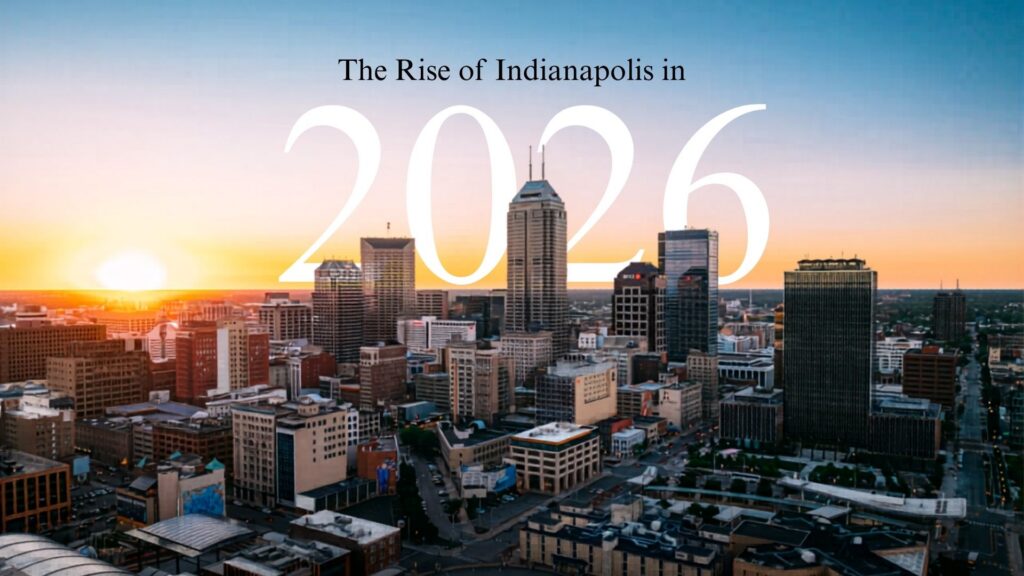
One of the biggest trends shaping the city right now is a shift in how people use space. Across the U.S., downtown office demand has softened, and Indianapolis is no exception. Recent reports show office vacancies rising in the urban core, while suburban areas are seeing stronger demand and growth. This shift isn’t necessarily a negative—it’s a transformation. As traditional office use declines, it opens the door for creative redevelopment, mixed-use projects, and new types of community-centered spaces.
At the same time, Indianapolis continues to stand out as one of the most affordable major metro areas in the country. In 2026, it has been recognized as a buyer-friendly housing market, with improving affordability and more balanced conditions between buyers and sellers. This balance is important—it signals a healthier market where opportunities are no longer limited to aggressive bidding wars or all-cash investors.
What makes Indianapolis particularly interesting right now is its position in the Midwest. While some high-growth markets in the South and West are slowing down, cities like Indianapolis are gaining attention for their stability and long-term potential. Housing prices are still rising, but at a measured pace, and inventory is gradually improving. For many, that combination creates a rare window: a market that is active, but not overheated.

E 191st St, Westfield, IN 46704
https://www.crexi.com/properties/1938077/indiana-e-191st-st-westfield-in-46704
Beyond housing, the city is also seeing momentum in industrial and infrastructure development. Indianapolis has been emerging as a strategic hub for logistics, manufacturing, and large-scale investment, supported by its central location and strong workforce. These factors continue to draw businesses to the region, which in turn supports population growth and housing demand.
New developments and projects—ranging from healthcare expansions to large mixed-use concepts—are also reshaping neighborhoods. Areas near major investments are seeing rising property values and renewed interest, reflecting a broader trend of reinvestment in both urban and surrounding communities.
However, not all growth comes without conversation. The expansion of data centers and new infrastructure projects has sparked public debate around sustainability, land use, and long-term impact. These discussions highlight an important reality: growth today is not just about building more, but about building thoughtfully.
For those observing the market closely, the most compelling story isn’t rapid expansion—it’s adaptability. Indianapolis is evolving in how space is used, how communities grow, and how development aligns with changing lifestyles. This evolution is creating opportunities that didn’t exist even a few years ago.
Land, in particular, is becoming part of that conversation. As developers look beyond traditional urban cores and explore suburban and transitional areas, the value of well-located land is being reexamined. Whether for residential, mixed-use, or community-driven projects, land offers flexibility in a market that is still defining its next phase.
What makes this moment unique is the balance. Indianapolis is not experiencing extreme volatility, nor is it standing still. It is moving forward—steadily, intentionally, and with increasing attention from those who recognize long-term value.
In many ways, Indianapolis reflects what the next chapter of American cities may look like: more balanced, more adaptable, and more focused on sustainable growth. And for those paying attention, that quiet momentum may be the most important trend of all.
Indianapolis isn’t defined by rapid hype, but by steady progress and real opportunity. As the city continues to evolve, its balance of affordability, growth, and adaptability makes it a place worth paying attention to—not just for today, but for what it’s becoming next.